← All Articles
Case Study

The Only Possible on Solana Playbook: How a Community Mantra Became a Global Brand Movement

Blokhaus  ·  Apr 20, 2026
Only Possible on Solana — OPOS campaign by Blokhaus

Most brand campaigns start in a room. Ours started on a timeline.

Before "Only Possible on Solana" became a campaign with a budget, a production schedule, and out-of-home placements in seven cities, it was just a phrase. A half-shrug from a developer on X. A caption under a 10,000-TPS stress test. A reply to a thread about transaction costs that ended, "…only possible on Solana."

It was already the truth the Solana ecosystem told itself. Our job wasn't to invent it. Our job was to figure out how to hand it back to the community at scale — and turn a community mantra into a global brand movement without losing what made it feel true in the first place.

This is the playbook.

The problem with marketing a decentralized entity

Traditional brand campaigns assume a traditional brand: a corporate owner, a brand book, a legal department, a single line of approval. Solana has none of that. The Solana Foundation doesn't own the ecosystem. Builders own the ecosystem. Users own the ecosystem. Validators, creators, and anon holders own the ecosystem.

Which means any campaign built on top of Solana has a choice: either override the community (and get rejected), or amplify the community (and risk losing control of the message).

The default playbook for crypto marketing is the first option — drop a campaign, hope the community rallies, move on to the next activation. It rarely works. Communities can smell a top-down brand moment from a mile away, and in Web3 they punish it openly.

We chose the second option. It's harder. It's slower. And it's the only approach that produces a campaign the community will carry on your behalf.
The moment we realized OPOS was already happening

The first insight came from listening. Before we wrote a single line of copy, we spent weeks reading Solana X threads, dev forums, and Discord servers — not to plant an idea, but to find an idea that was already forming.

What we found was consistent across every corner of the ecosystem: when Solana builders wanted to explain why they chose Solana over every other L1, they reached for the same phrase. "This is only possible on Solana." It showed up in pitch decks, in product launch threads, in developer interviews. It was a rhetorical shrug that did enormous lifting — it collapsed the entire technical argument (throughput, cost, composability) into a statement about ambition.

That's when we knew: the campaign already existed. It just didn't have a flag.

Our job was to give it one.

The core principle: community-first, not community-approved

There's a critical difference between these two approaches, and most agencies get it wrong.

Community-approved means you build a campaign in a room, then show it to the community and hope they like it. The community is a checkpoint.

Community-first means you build the campaign from the community — from the language they're already using, the metaphors they've already internalized, the ambitions they already share. The community is the source.

For OPOS, we operated entirely community-first. Every piece of creative started with a real quote, a real moment, a real builder. The hero video? Sourced from builder clips the ecosystem had already created. The headline? Already written by the community, just formalized. The out-of-home? Designed to feel like an ecosystem moment, not a corporate placement.

The test we used: could a Solana builder see this and feel like they wrote it? If no, we reworked it.

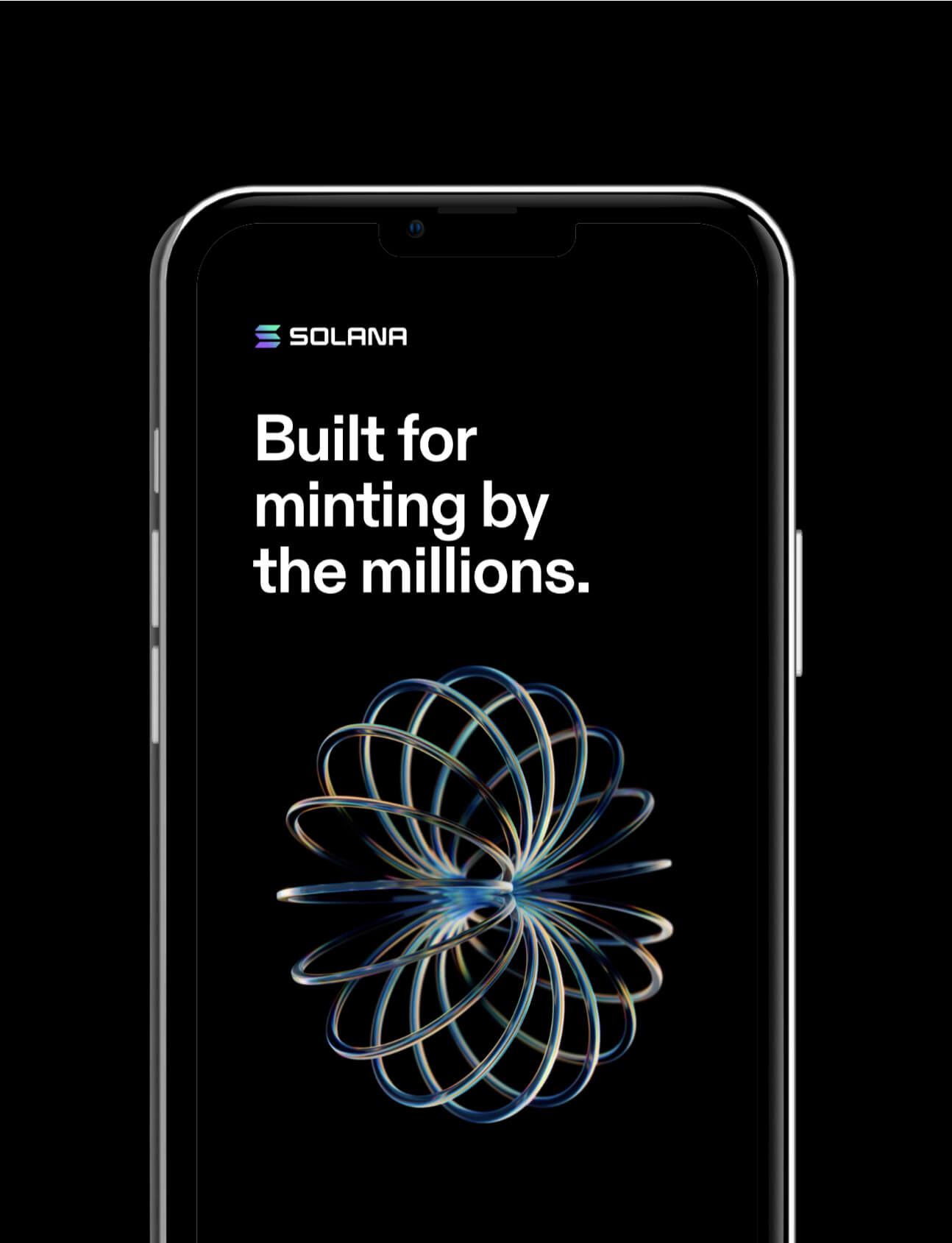
Only Possible on Solana campaign creative OPOS creative execution

Turning a mantra into a campaign system

A slogan is one-shot. A campaign system is infinite. We knew OPOS had to be the second — because the only way to scale community-first is to hand the community a template and get out of the way.

Here's the system we built:

1. The container (what stays the same)

"Only Possible on Solana" — the phrase, the typography, the composition grid. These never change. They're the brand signal that ties disparate community content back to a single story.

2. The content (what changes everywhere)

The subjects, stories, and voices. Every OPOS execution features a different builder, a different product, a different use case. The system flexes for the infinite range of what Solana actually enables. One week it's a 400ms transaction. The next it's an NFT mint that crashed every competing chain. The next it's a DePIN network with real-world sensors.

3. The permission (what the community can do with it)

From day one, we designed OPOS to be ownable by anyone in the ecosystem. Template files, campaign assets, approved word marks — all made available to Solana projects to use in their own launches. If your protocol was shipping something "only possible on Solana," you could plug yourself into the campaign without asking permission.

This is the part most agencies skip. They guard the brand like it's a walled garden. The magic of OPOS is that the brand was designed to leak.

Going global: from grassroots UGC to out-of-home

The paradox of community-led campaigns is that "authenticity" and "scale" usually work against each other. The bigger you make something, the more it feels like a corporate rollout. The more grassroots you keep it, the less it reaches outside the echo chamber.

We solved for this by staging the campaign in phases that matched the community's own rhythm.

Phase 1: Seed (community-owned)

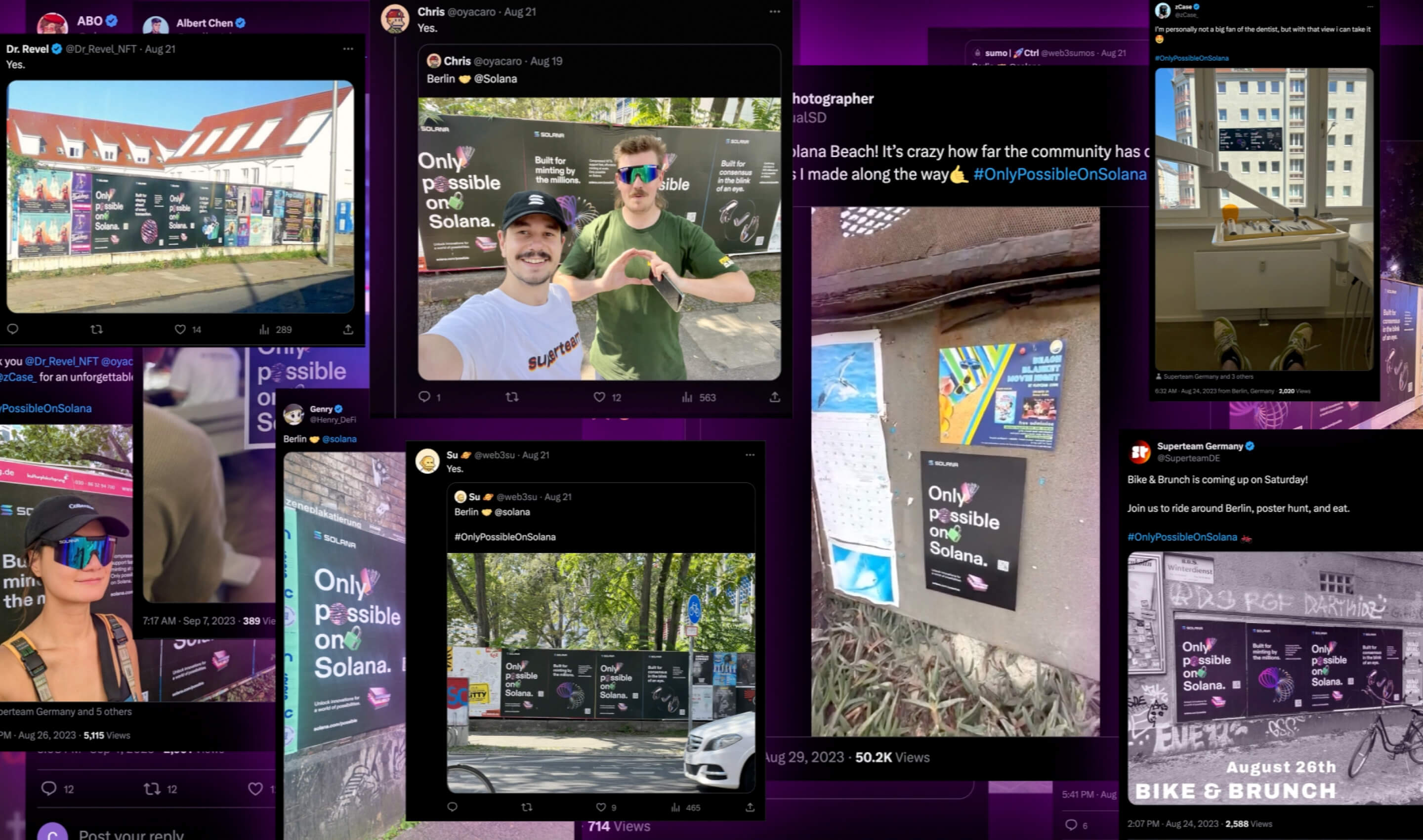
We worked directly with builders and creators to launch the campaign from their accounts, not Solana's. The first wave of OPOS content didn't come from the Solana Foundation — it came from the protocols, projects, and people the community was already following. That's where the trust was.

Phase 2: Amplify (ecosystem-wide)

Once the campaign had traction inside the ecosystem, we rolled out coordinated pushes across Solana's owned channels. By this point the phrase was already circulating — we were amplifying momentum, not creating it.

Phase 3: Broadcast (out-of-home + paid)

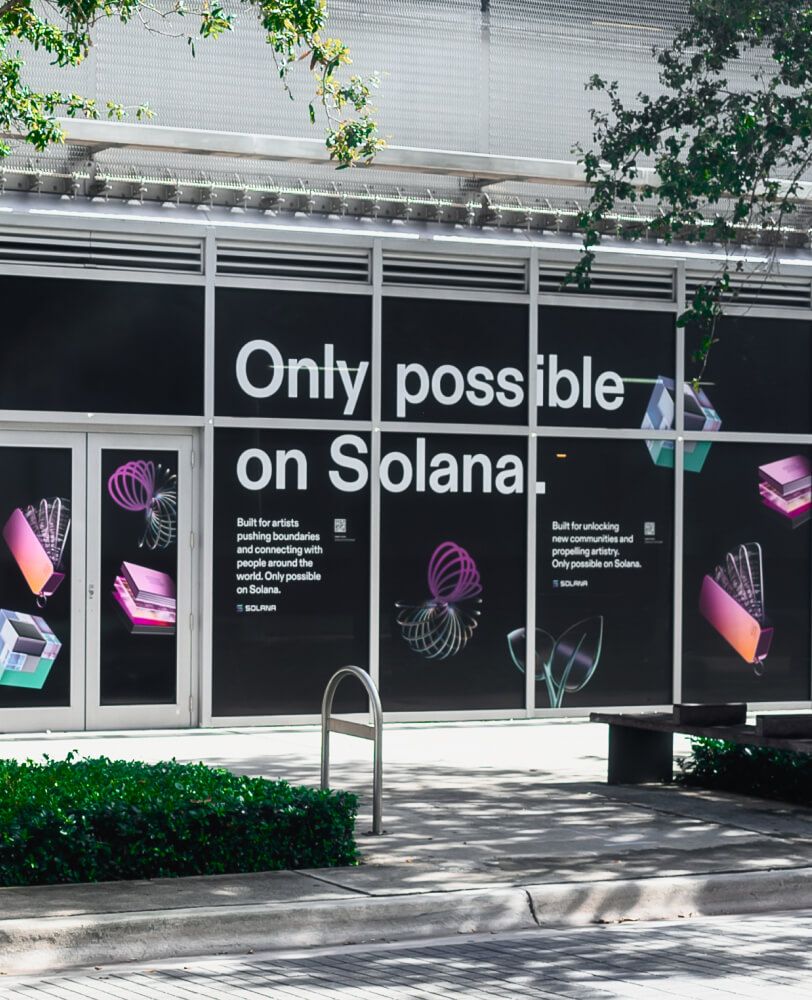
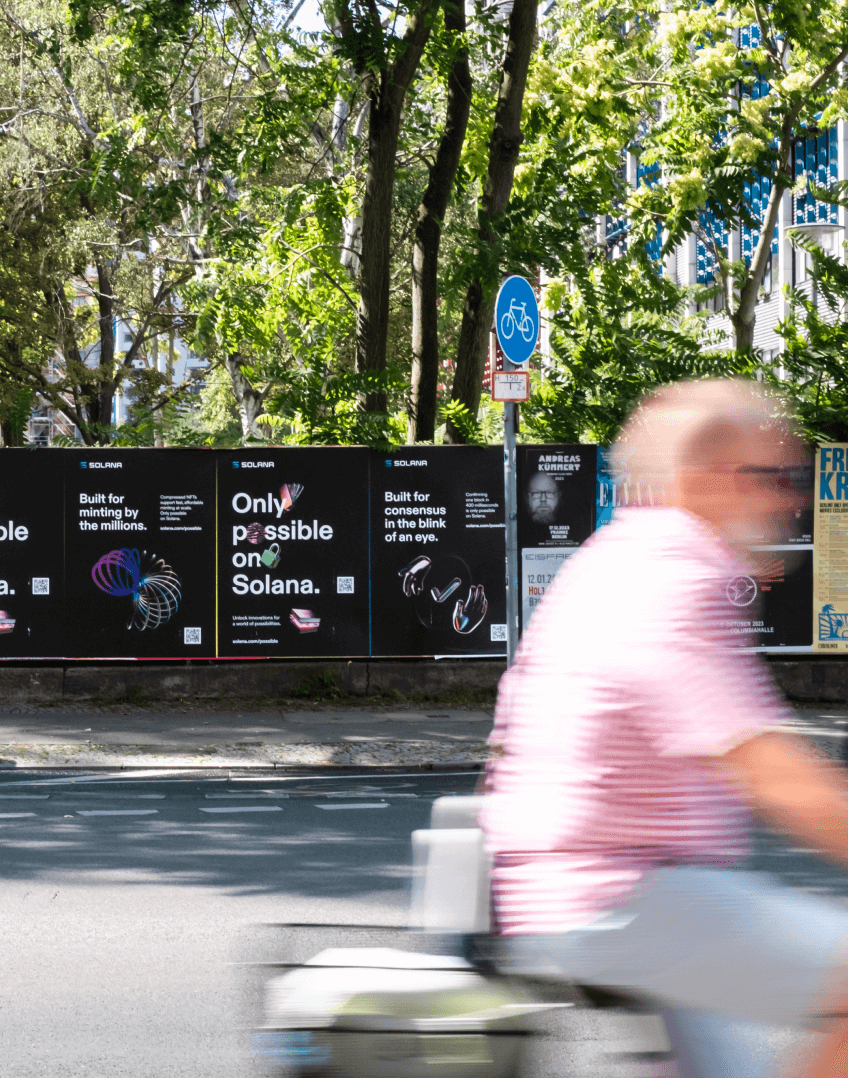
Only after the ecosystem was fully bought in did we deploy OPOS into the physical world: out-of-home placements at Breakpoint, Solana Hacker Houses, global events. The billboards worked precisely because the community recognized them as theirs by the time they appeared.

Staging matters. If we'd started with billboards, they would have felt imposed. By the time they went up, they felt earned.

OPOS out-of-home placement OPOS global event creative OPOS physical activation

The landing page: KPI-focused, ecosystem-flavored

A campaign without a commercial engine is just a vibe. OPOS pointed everything — every piece of creative, every partner post, every billboard — to a single landing page designed to convert attention into action.

The KPIs we built for were simple:

The page itself was designed as a living artifact — showcasing the best OPOS content from the community, with real-time updates as new projects submitted their own "only possible" moments. It wasn't a conversion funnel pretending to be a landing page. It was a cultural hub that happened to convert.

What we learned — the playbook

After running OPOS through multiple waves, these are the principles that held up:

1. The best campaigns are archaeological, not architectural

Don't build a new story. Find the story the audience is already telling themselves and give it a flag. OPOS worked because we didn't invent it — we surfaced it.

2. Authenticity is measurable

You can test whether a campaign feels authentic by asking a simple question: would a real community member be proud to share this? If the answer is anything other than an obvious yes, keep working.

3. Design the brand to leak

Most brand systems are built for control. Community-led systems are built for distribution. The easier it is for your community to use your campaign, the further it goes.

4. Stage the scale

Grassroots → ecosystem → broadcast. Skipping stages breaks trust. You don't start with billboards. You end with billboards.

5. Metrics that matter live inside the ecosystem

Reach is a lazy metric for crypto. What matters is who's reaching. A single post from a respected Solana builder is worth more than a million impressions from a paid placement. Budget accordingly.

6. The community is your co-author, not your audience

This is the mindset shift. Once you stop thinking of the community as the target and start thinking of them as the co-creators, everything changes. You stop writing to them and start writing with them.

Why this matters beyond Solana

OPOS worked because Solana is a community-first chain. But the playbook generalizes.

Every brand in crypto, Web3, AI, and fintech is really building the same thing: a technology people don't yet have language for. The brands that win aren't the ones that invent new language — they're the ones that find the language the community is already using and give it a megaphone.

This isn't just true for crypto. It's true for any category where the audience knows more than the brand. In 2026, that's most categories.

If you're building in emerging tech, your audience is almost certainly ahead of you. Your job as a marketer isn't to teach them. It's to listen carefully enough to hand their own ideas back to them, amplified.

That's what Only Possible on Solana did. That's the playbook.


Want to run a campaign like this?

Blokhaus is the creative and marketing agency behind OPOS, NEAR, Algorand, and more. We specialize in building brand campaigns for AI, blockchain, crypto, and fintech startups — the kind of campaigns that communities carry, not tolerate.

Let's talk →