Can you prove you know something without revealing it? Discover how zero-knowledge proofs work, why they matter, and how they are reshaping privacy in Web3.
Zero-knowledge proofs (ZKPs) might sound like something out of a spy novel — but they're very real and increasingly important in modern cryptography. They allow a prover to convince a verifier that they know a secret without ever revealing what that secret actually is. At first, this seems impossible. Yet this is exactly the elegance behind ZKPs.
A simple analogy: the lock and the curtain
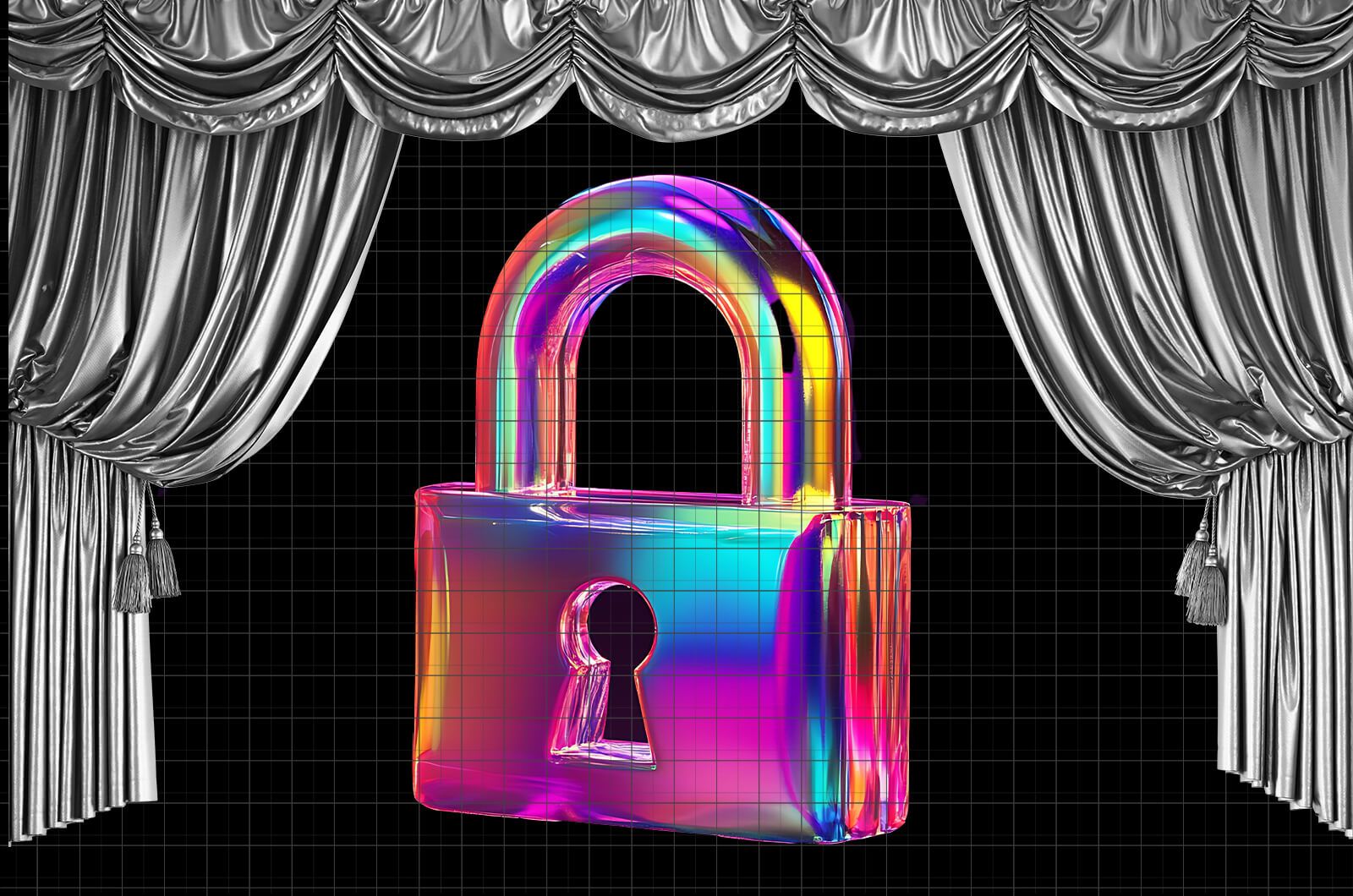
Imagine you have a locked box that only you can open. You want to prove to your friend that you know the combination — but if you open it in plain sight, you've also given the combination away. If instead you step behind a curtain to open it, your friend hears the click and sees the interior without ever seeing which numbers you used. They know you possess the combination; they just don't know what it is. That's the essence of a zero-knowledge proof.
The "Ali Baba Cave" illustration
A classic thought experiment: a cave has two paths (A and B) that loop back together at a hidden door requiring a secret phrase. You claim to know the phrase. A verifier stands outside while you enter via Path A, open the hidden door, and exit via Path B. The verifier sees you disappear into one path and emerge from the other — the only possible explanation is that you know the secret phrase. But you never uttered it. That demonstration is a zero-knowledge proof.
Real-world applications
These analogies reflect how ZKPs work in actual cryptographic systems. One practical example: proving you're over 18 without disclosing your exact birthdate. Another is seen in privacy-focused blockchains like Zcash, which use zk-SNARKs (Zero-Knowledge Succinct Non-Interactive Arguments of Knowledge) to verify transactions as valid — no double spending, no fraud — without exposing the sender, recipient, or amount.
How zk-SNARKs work
zk-SNARKs have four key properties: they reveal nothing about the underlying secret (zero-knowledge), the proof is small and fast to check (succinct), no back-and-forth is required (non-interactive), and the proof can only be constructed by someone who actually possesses the knowledge (argument of knowledge). Under the hood, they rely on polynomial commitments and elliptic curve pairings — complex math, simple goal.
Benefits, challenges, and the future
ZKPs reduce the risk of leaking sensitive information and bolster security against attackers. But generating proofs can be computationally expensive, implementation is complex, and some regulations require data disclosure that conflicts with zero-knowledge principles. As the technology matures, expect to see it deployed in identity management, financial transactions, regulatory compliance, and beyond — a paradigm where privacy and security can finally go hand in hand.