A quick guide to open and decentralized finance, and why it matters more than you might think for the future of payments, banking, and consumer financial tools.
My job at Blokhaus is to see things from a bird's eye view — navigating projects, timelines, finances, and client priorities. Part of that means diving into the niche tech aspects of our clients' businesses. If you're curious about the dynamic world of fintech but haven't quite found your footing, let me guide you through where innovation and finance intersect.
Two game-changers are reshaping traditional finance: Open Finance and Decentralized Finance (DeFi). An analogy helps make sense of both.
1. Open Finance: upgrading the ground transportation network
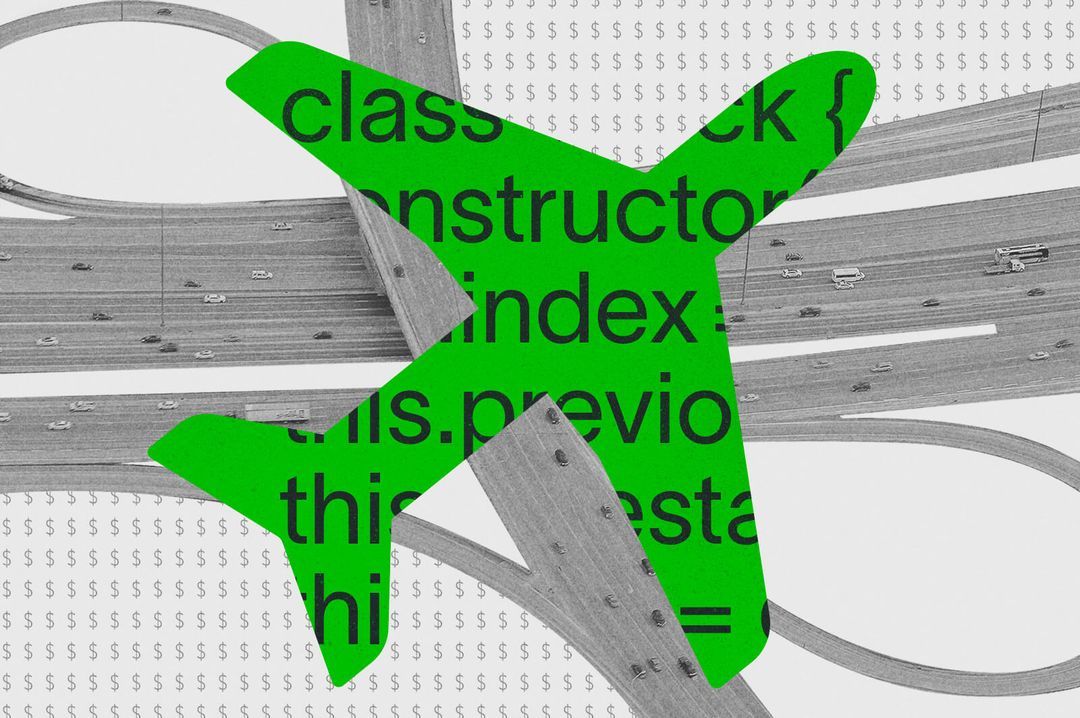
Imagine the financial landscape as a sprawling network of roads, train tracks, and bike paths connecting cities — each city a financial institution. Open Finance is a significant upgrade to that network: building ring roads, widening highways, replacing tolls with E-ZPass, and creating something like Waze. Financial data flows more seamlessly between institutions, like well-coordinated traffic signals.
Open Finance in the US was enabled by central banks providing access to customer data with customer consent — allowing third parties to build financial products at an unprecedented rate. Think Zelle, Robinhood, Stripe, Chime, Affirm, and Betterment.
2. DeFi: building a new skyway network
Now imagine a revolution that doesn't just upgrade existing roads but constructs an entirely new system in the sky — a skyway network. That's Decentralized Finance. Rather than traditional ground routes, decentralized and transparent smart contracts operate like a futuristic elevated system, entirely above conventional infrastructure.
DeFi has the potential to reshape finance the way commercial aviation transformed travel — making it more accessible, efficient, and global. All DeFi relies on one or more blockchains (the skyway) and involves cryptocurrency that can't move on traditional rails. Popular supporting networks include Ethereum, Solana, and Polkadot.
3. Coexistence: ground transportation meets skyways
These two systems will coexist for a significant period. Most transactions will continue flowing through upgraded ground infrastructure, while early adopters explore the advantages of the skyways. The transition requires bridges — a smooth evolution that ensures everyone can navigate comfortably as the landscape changes.
Companies like Coinbase, Plaid, and CoinTracker are already building user-friendly hubs at the intersection of DeFi and Open Finance. Expect more of these to emerge, making decentralized financial services accessible to everyday users.
4. Why this matters
Finance surrounds us, yet FinTech — especially DeFi — remains a mystery to many. Understanding it gives you the power to shape your own financial future. FinTech has already empowered millions to access banking systems, monitor their financial health, plan for the future, and participate in global markets once off-limits to everyday people. Once you start exploring, it's hard to stop.